Kent Barker Collection / The Sixth Floor Museum at Dealey Plaza
January 2, 1960
JFK ENTERS THE PRESIDENTIAL RACE
Senator Kennedy announces his candidacy for President of the United States.
Listen to an excerpt from the oral history interview with Jacques Lowe, the Kennedys' personal photographer for many years, by clicking "Find out more."
Image: Kennedy's presidential campaign button features his face on a background of red, white and blue stripes.
SOLD OUT.
Purchase tickets for the 3:00 p.m. program here.
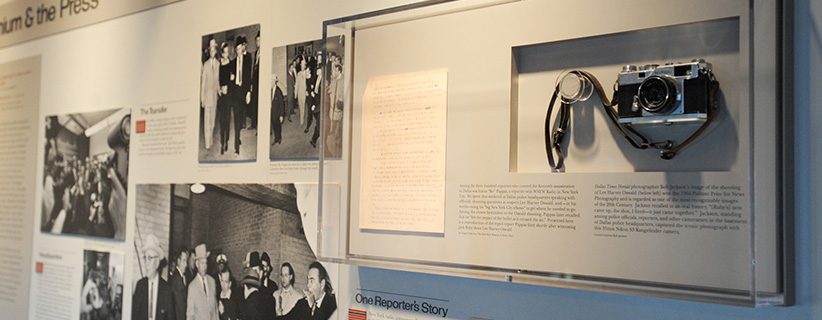
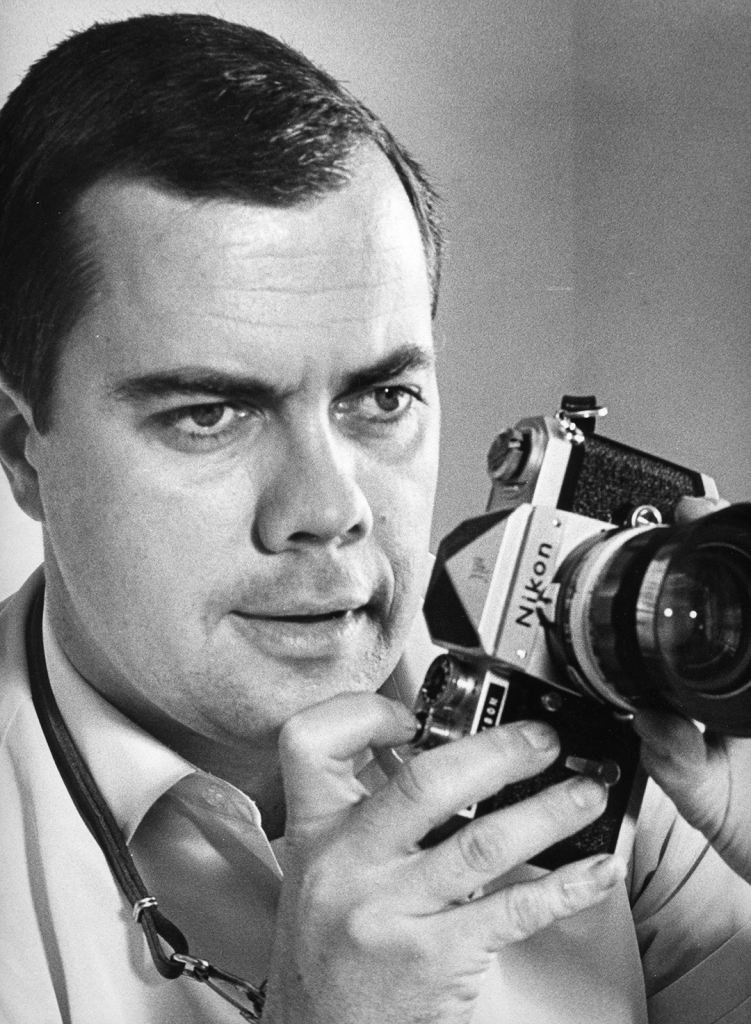
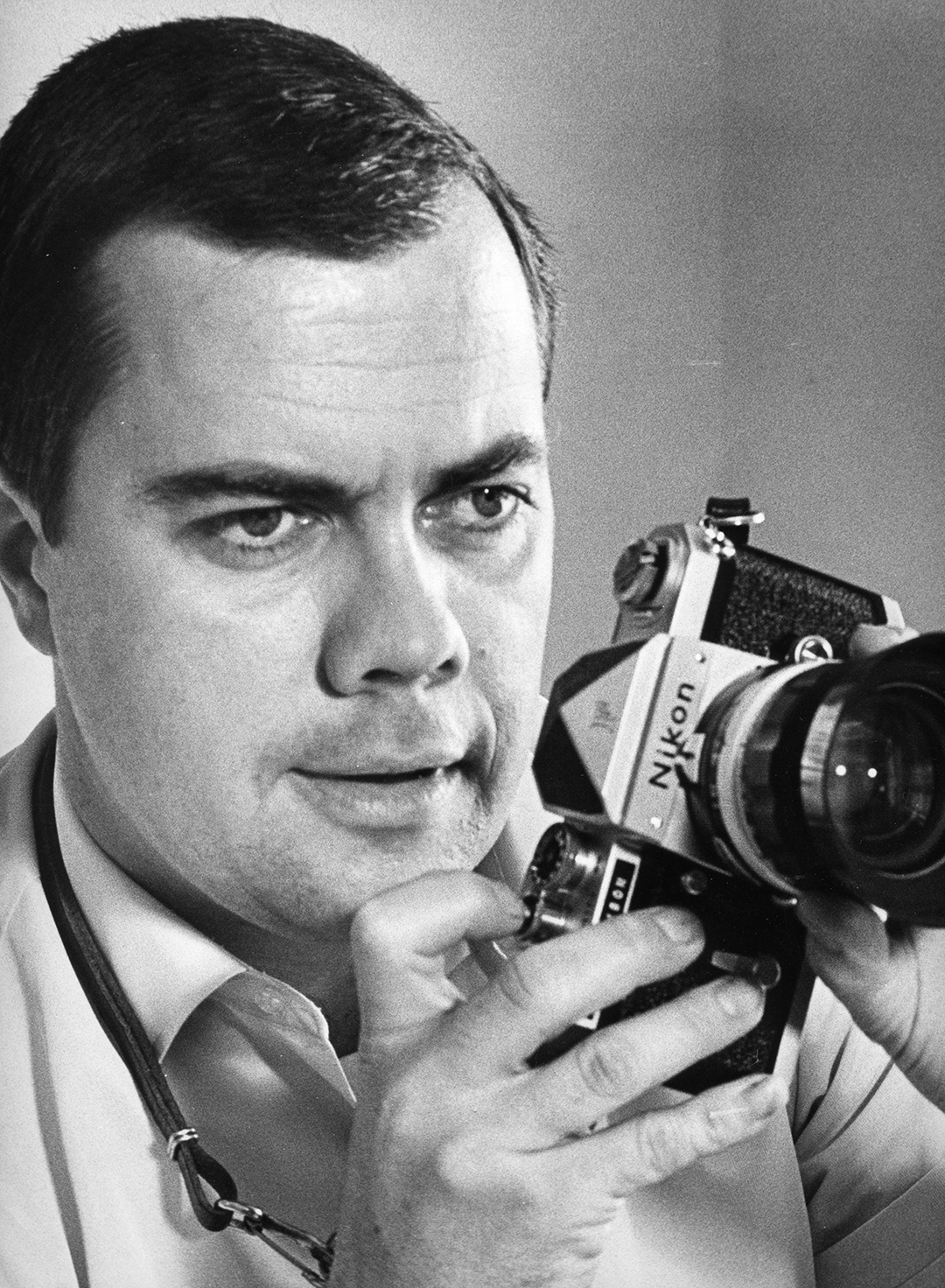
On Saturday, November 22, 2025, Pulitzer Prize-winning photojournalist Bob Jackson returns to the Museum for a powerful anniversary program, Dallas: Through the Lens of Bob Jackson. The former Dallas Times Herald photographer is best known for capturing the moment of the murder of alleged John F. Kennedy assassin Lee Harvey Oswald by nightclub owner Jack Ruby, one of the most important news images of the 20th century. Bob recently gifted the Museum his photographic archive, numbering more than 15,000 images documenting Dallas history during the 1960s and 1970s as well as his Nikon 35mm camera, which has been on long-term loan to the Museum. Bob covered human interest stories and hard news, documented major events and social activism, and captured images of numerous dignitaries and celebrities who visited the city in the years following the Kennedy assassination.
The Sixth Floor Museum at Dealey Plaza
In a rare public appearance, Jackson will share never-before-seen images and personal reflections spanning his decades-long career. Audiences will journey beyond the iconic photographs taken in 1963 to explore a broader visual history of North Texas, including school desegregation and political milestones to music legends, society events, and cultural change in Dallas. Presented through a moderated conversation with Museum Head of Curatorial Stephen Fagin, this special event honors Jackson’s extraordinary gift to the Museum and deepens our collective understanding of Dallas during a transformative era.
ABOUT THE SPEAKER:
Born in Dallas in 1934 and raised in University Park, Bob Jackson became interest in photography at age 14 in 1948, while attending Highland Park High School where he worked shooting photographs for the yearbook and newspaper. He studied business in college, but his passion for photography grew. Jackson was able to continue shooting photos throughout his service in the United States Army and in the Reserves. Following his time in the Army, Jackson worked as a freelance photographer, shooting mostly sports car racing all over the Southwest. In 1960, Jackson was hired as a staff photographer for the Dallas Times Herald. He was out on assignment covering President John F. Kennedy’s visit to Dallas on November 22, 1963; he rode in a car the motorcade amongst fellow photojournalists from rival publications. On November 24, Jackson positioned himself in the basement of Dallas Police Headquarters, hoping to take images of Lee Harvey Oswald’s transfer to county jail. In an instant, Jackson released the shutter and captured one of the most pivotal moments in American history, earning him the 1964 Pulitzer Prize for photography. In 1968, Jackson left the Dallas Times Herald to work briefly at the Denver Post, only to rejoin the Times Herald before turning to work as a freelancer and founder of the 1970s Dallas society and fashion publication, Society Section. In 1980, Bob joined the staff of the Colorado Springs Gazette-Telegraph, a job he would hold until his retirement in 1999. Bob and his wife Debbie now live in Manitou Springs, Colorado and have been married for more than 40 years.
Tickets do not include Museum admission.
Museum members receive discounted ticket pricing. Contact membership@jfk.org to learn more.
On Saturday, November 22, 2025, Pulitzer Prize-winning photojournalist Bob Jackson returns to the Museum for a powerful anniversary program, Dallas: Through the Lens of Bob Jackson. The former Dallas Times Herald photographer is best known for capturing the moment of the murder of alleged John F. Kennedy assassin Lee Harvey Oswald by nightclub owner Jack Ruby, one of the most important news images of the 20th century. Bob recently gifted the Museum his photographic archive, numbering more than 15,000 images documenting Dallas history during the 1960s and 1970s as well as his Nikon 35mm camera, which has been on long-term loan to the Museum. Bob covered human interest stories and hard news, documented major events and social activism, and captured images of numerous dignitaries and celebrities who visited the city in the years following the Kennedy assassination.
The Sixth Floor Museum at Dealey Plaza
In a rare public appearance, Jackson will share never-before-seen images and personal reflections spanning his decades-long career. Audiences will journey beyond the iconic photographs taken in 1963 to explore a broader visual history of North Texas, including school desegregation and political milestones to music legends, society events, and cultural change in Dallas. Presented through a moderated conversation with Museum Head of Curatorial Stephen Fagin, this special event honors Jackson’s extraordinary gift to the Museum and deepens our collective understanding of Dallas during a transformative era.
ABOUT THE SPEAKER:
Born in Dallas in 1934 and raised in University Park, Bob Jackson became interest in photography at age 14 in 1948, while attending Highland Park High School where he worked shooting photographs for the yearbook and newspaper. He studied business in college, but his passion for photography grew. Jackson was able to continue shooting photos throughout his service in the United States Army and in the Reserves. Following his time in the Army, Jackson worked as a freelance photographer, shooting mostly sports car racing all over the Southwest. In 1960, Jackson was hired as a staff photographer for the Dallas Times Herald. He was out on assignment covering President John F. Kennedy’s visit to Dallas on November 22, 1963; he rode in a car the motorcade amongst fellow photojournalists from rival publications. On November 24, Jackson positioned himself in the basement of Dallas Police Headquarters, hoping to take images of Lee Harvey Oswald’s transfer to county jail. In an instant, Jackson released the shutter and captured one of the most pivotal moments in American history, earning him the 1964 Pulitzer Prize for photography. In 1968, Jackson left the Dallas Times Herald to work briefly at the Denver Post, only to rejoin the Times Herald before turning to work as a freelancer and founder of the 1970s Dallas society and fashion publication, Society Section. In 1980, Bob joined the staff of the Colorado Springs Gazette-Telegraph, a job he would hold until his retirement in 1999. Bob and his wife Debbie now live in Manitou Springs, Colorado and have been married for more than 40 years.
Tickets do not include Museum admission.
Museum members receive discounted ticket pricing. Contact membership@jfk.org to learn more.
ACCEPT COOKIES?
This website uses cookies. Some are essential, while others help us improve your experience. You may opt-in by clicking accept or opt-out by clicking deny. By using our site you are accepting our privacy policy.